DevRel
Empowering the Next Generation: Airbyte at Los Altos Hacks IX
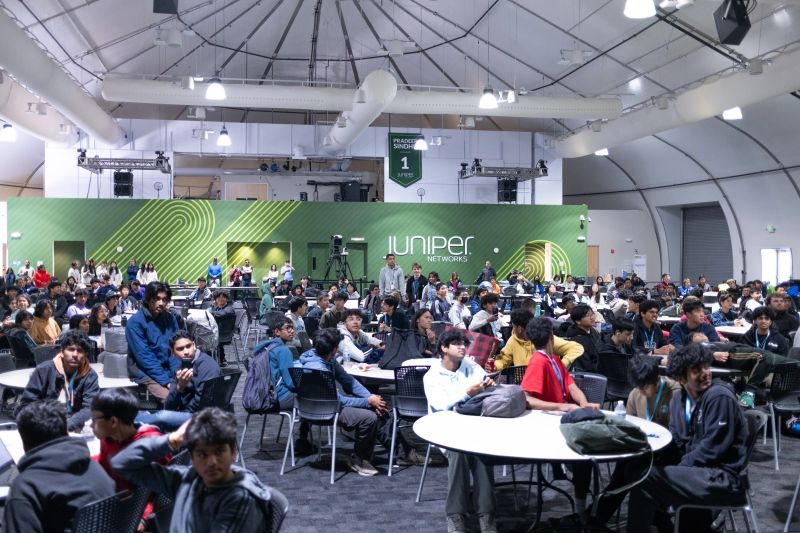
A beautiful sunny day in Sunnyvale, combined with some of the brightest young minds of Los Altos High School, spawned a series of technically innovative and mind-boggling projects - all built over a span of 24 hours.
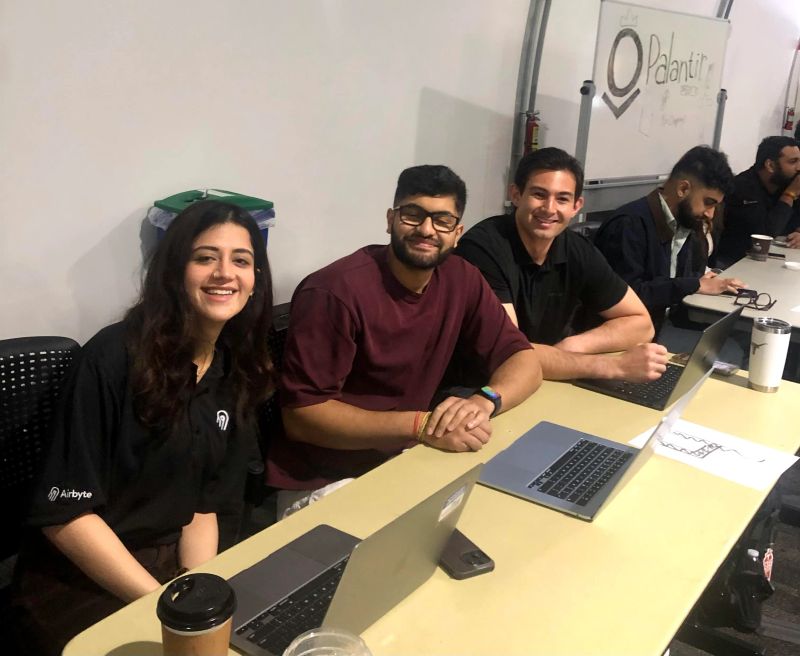
The hackathon was held at Juniper Aspiration Dome on April 5th-6th. As a sponsor of this inspiring event, our team had the privilege of witnessing high school students tackle complex technical challenges with enthusiasm and ingenuity that would impress even seasoned engineers.
Inspiring the Data Engineers of Tomorrow
When we decided to sponsor Los Altos Hacks, our mission was simple: introduce students to the often-overlooked but critical world of data engineering. In a landscape where AI and machine learning get most of the spotlight, we wanted to show these students that behind every successful AI application lies a robust data pipeline.
Bridging Theory and Practice: From Data to AI Applications
One of the highlights of our participation was hosting a hands-on workshop that demonstrated the complete journey from raw data to AI application. Students learned how to:
- Ingest data from the Spotify Web API using Airbyte’s Connector Builder on Airbyte Cloud
- Move that data into a Pinecone vector database
- Build a functional AI application using Next.js and OpenAI’s API for embeddings and chat completions
While many students were already familiar with tools like ChatGPT, seeing how data pipelines enable backend intelligence was especially eye-opening! The most common curiosity? How retrieval-augmented generation (RAG) works under the hood — and how vector search enables AI systems to efficiently learn from data.
Standout Projects That Impressed Us
Los Altos Hacks IX showcased an incredible range of student innovation. Here are some of the most remarkable projects across different categories:
UI/UX: TrueScan
The TrueScan team delivered a masterclass in user experience design. Their web application for verifying the credibility of online information featured:
- A stunningly clean landing page with the clear value proposition: "Verify a site's integrity with one click"
- Intuitive single-action interface requiring minimal user input
- Clear visual feedback on source credibility
- A thoughtful information hierarchy that made complex verification accessible
The team's understanding of user psychology was evident in how they reduced a complex verification process to a single interaction while still providing depth for users who wanted to understand more.
Technically Complex: SafeAI
In terms of technical sophistication, SafeAI stood head and shoulders above many projects. This security system for schools integrated:
- Real-time computer vision processing using CLIP, PyTorch, and Moondream 2
- Hardware acceleration for both CUDA GPUs and Apple Silicon
- Next.js and React frontend with TypeScript and Tailwind CSS
- Google's Gemini 2.0 Flash for contextual security recommendations
The team managed to write approximately 10,000 lines of code during the hackathon, creating a system that could detect weapons in under one second—a remarkable technical achievement for high school students.
Mental Health & Wellbeing: FitMotion & Whiteboard
Two projects stood out for their focus on mental and emotional wellbeing:
FitMotion addressed physical health with downstream mental health benefits. The team built this application after noticing their parents often abandoning exercise routines due to lack of support or inconvenience. Their solution used smartphone sensors to:
- Provide real-time feedback on exercise form
- Create personalized workout suggestions based on goals
- Track progress in an encouraging, visually appealing way
The team's attention to making fitness accessible and less intimidating showed real empathy for users who struggle with exercise consistency.
Whiteboard tackled the mental health challenges faced by both students and teachers in overcrowded classrooms. By creating an AI-powered grading and feedback system, they addressed:
- Teacher burnout from 15-20 hours of weekly grading
- Student anxiety from delayed or insufficient feedback
- The need for personalized learning approaches
What impressed us about Whiteboard was how they recognized that education technology should serve both sides of the classroom equation—reducing teacher workload while improving student outcomes.
Overall Product: CHEHRA Smart Attendance
The CHEHRA attendance system stood out as one of the most complete end-to-end products. This full-stack project combined:
- A polished web interface for student registration
- Facial recognition using OpenCV
- Hardware integration with Arduino, LCD displays, and sensors
- Adaptive camera positioning using servos
- Visual and audio feedback systems
What made this project exceptional was its readiness for real-world deployment. The attention to practical details—like using an ultrasonic sensor to detect presence before triggering scans, or including a manual stop button—showed a deep understanding of how technology needs to function in actual school environments.
The Impact of Open Tools
One theme that emerged throughout the event was the students' appreciation for open-source tools. Many participants initially planned to build their own data connectors from scratch, unaware that robust open solutions already existed. After learning about available resources, several teams were able to reallocate their limited hackathon time from building infrastructure to developing their core innovation.
Beyond the Hackathon: Creating Lasting Impact
What began as a sponsorship opportunity evolved into something more meaningful. Throughout the event, we witnessed several moments that demonstrated the long-term impact of introducing data engineering concepts to young developers:
From AI Consumers to AI Infrastructure Builders
Many students arrived at Los Altos Hacks already building sophisticated AI applications, but with limited understanding of the data infrastructure that powers them. By the end of our workshop, we overheard students discussing vector similarity search, embedding dimensions, and data pipeline architecture—concepts that had been entirely foreign to them hours earlier!
Looking Forward: Nurturing the Next Generation
The 24 hours we spent at Los Altos Hacks reinforced our belief in the importance of investing in young talent. What surprised us most wasn't just the technical skills these students possessed, but their eagerness to understand the underlying infrastructure that makes modern applications possible.
As we continue to support educational initiatives, we're committed to making data engineering more accessible to young developers. The open-source ethos of building tools that are free, transparent, and community-supported resonated deeply with these students, who are already thinking about how they can contribute to the broader technology ecosystem.
Several students have already joined our community forums, where they're asking sophisticated questions and building connections with professional engineers. This organic community growth might be the most valuable outcome of our sponsorship.
Resources for Young AI Engineers
For students and educators interested in exploring the data infrastructure behind AI applications:
- Explore tutorials on building complete AI data pipelines
- Experiment with open-source tools for data movement and vector databases
- Join our community forum where students can connect with professionals building AI data infrastructure
We've made the code associated with the workshop open-source, as well as countless other tutorials online explaining how to build and leverage these data pipelines. Come build with us!